
April 21, 2023
Reasons for Tooth Extraction
 By the Premier Dental Esthetics team, led by Dr. Peter S. Young, DDS, MAGD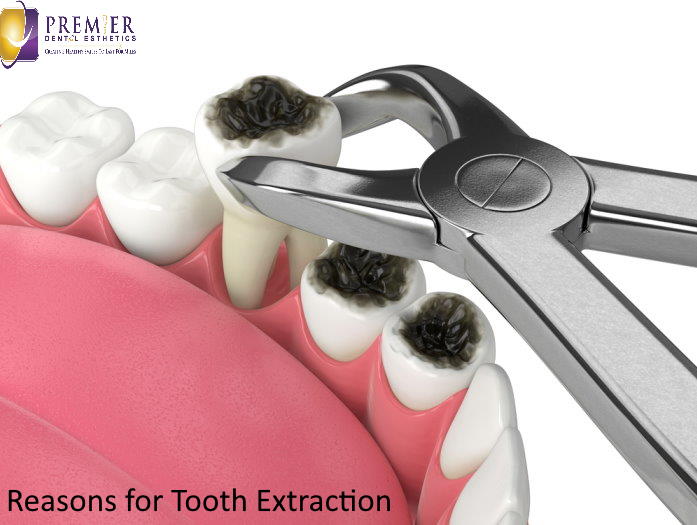
An extraction is the last option for a dental professional to treat tooth problems. Tooth extraction refers to completely removing one or more teeth from the jaws. Your tooth must be extracted if it cannot be repaired or is severely decayed. Your mouth becomes susceptible to infections and pathogens if you choose not to have a tooth extracted. The likelihood of an abscess increases if an infected tooth persists in the mouth. A tooth abscess is a pus-filled cavity caused by bacteria that spreads the infection to other areas of the cranium. Before extracting your tooth, dentists treat the underlying conditions, such as conducting root canals, eliminating cavities, or any other treatment.
What Are the Signs That Indicate a Tooth Needs to Be Extracted?
Tooth pain, mandible pain, and a history of recurring periodontal disease indicate that a tooth should be extracted. Extraction is necessary when there are no available treatments to save the tooth and you are experiencing pain or infection. If your tooth becomes severely decayed, extraction will be necessary. Dentists recommend tooth extraction if a tooth is beyond restoration. The extraction of a molar is essential to maintain oral health. A tooth that is compressed or impacted must be extracted to prevent pain and infection. Your dentist evaluates the condition of your teeth to determine whether tooth extraction is necessary.
Severe Tooth Decay
A tooth with extensive decay must be extracted to prevent infection throughout the mouth. Tooth decay is the deterioration of dental enamel, the tough, outermost layer of teeth. The development of a cavity on a tooth constitutes dental decay. A cavity is a chronically injured area of a tooth that generates a hole. A cavity develops due to excessive sugar consumption or poor oral hygiene. Untreated severe tooth decay results in tooth loss and infections. Extreme dental decay can be identified by tooth discoloration or the presence of cavities.
Impacted Tooth
A tooth that is impacted and causes discomfort must be extracted. A tooth that has not emerged from the tissues or grown into its proper position is impacted. A tooth that did not develop normally can cause discomfort in the gums, mandible, and cranium. An impacted tooth must be extracted in order to prevent discomfort and harm to the surrounding teeth.
Gum Disease
Gum disease, also known as periodontal disease, is an infection that affects both the gums and the bones that support the teeth. Severe periodontal disease results in toothaches, edema, and hemorrhaging. When periodontal disease has progressed beyond the point of correction, tooth extraction will be necessary. Plaque buildup on the teeth and poor oral hygiene practices cause gum disease. Untreated gum disease results in tooth loss and the spread of infection.
Teeth Overcrowding
Overcrowded teeth that are causing distress must be extracted. Teeth crowding occurs when the mandible has insufficient space for all the teeth to align normally. Crowded teeth make oral hygiene more difficult and foster the development of pathogens.
Infection
An infected tooth causes pain and profuse hemorrhaging in the mouth. A severe dental infection results in a tooth abscess, a pus-filled pocket caused by bacteria. Untreated tooth infections result in an infection that causes discomfort in other areas of the cranium. Tooth extraction is frequently the dentist’s last resort. Tooth extraction eliminates the infected tooth, alleviates discomfort, and creates space for a healthier smile.
Accident
Accidents and sports injuries can cause a healthy tooth to loosen or slide out. It is possible to save an intact molar through reattachment. However, sometimes an accident causes the tooth to be irreparable. In this instance, tooth extraction is essential to the healing process. Otherwise, a damaged tooth may become severely infected, necessitating an excruciating procedure such as a root canal.
Is It Better to Save a Tooth or Extract It?
When your tooth is too damaged to be repaired, a dentist may need to extract it. However, saving it could be an option if the tooth is not severely infected. Opting to save your tooth helps you maintain your appearance and avoid a gap in your smile, while also potentially saving you cost of tooth extraction. Refusing a tooth extraction could cause infections and bacteria to spread throughout your mouth. Infection can increase the risk of an abscess, a pocket of pus caused by a bacterial infection. Leaving an abscess untreated can cause the infection to spread to other parts of your head.
What Happens if Teeth Are Not Extracted?
Choosing not to get a tooth extraction when needed allows bacteria to spread, resulting in serious infections that can damage the surrounding teeth and gums. This can cause pain in other parts of your head and negatively impact oral health.
What is Considered an Emergency Tooth Extraction?
You should seek an emergency teeth extraction for unbearable tooth pain from severe infection. An emergency tooth extraction is necessary when a tooth must be extracted within twenty-four to forty-eight hours. You can contact your dentist to schedule a routine appointment for a non-emergency tooth extraction. Visit a dentist immediately if you are experiencing severe tooth pain or excessive hemorrhaging.
Does Gum Disease Go Away When Teeth are Removed?
No, tooth removal will not eliminate periodontal disease. If you do not practice proper oral hygiene or receive treatment for gum disease, it can continue to spread.
Is It Better to Extract a Decayed Tooth?
Certainly, it would be beneficial for you to have your decayed tooth extracted. If you choose not to extract an infected tooth, you run a greater risk of infection and bacterial dissemination throughout your mouth.
What Happens to the Cavity After Tooth Extraction?
After tooth extraction, the cavity in your tooth is eliminated. After a tooth with a cavity has been extracted, the resulting temporary opening must recover and be filled.
What to know about Tooth Extraction besides reasons for it?
Tooth extraction is a common dental procedure that involves removing a tooth from its socket in the jawbone. Besides understanding the reasons why a tooth may need to be extracted and the process of removing a tooth, it’s important to know that there are different types of extractions, including simple and surgical. Additionally, aftercare instructions and potential complications, such as dry socket or infection, should also be discussed with your dentist.
Dr. Peter S. Young at Premier Dental Esthetics is a committed dentist who strives to enhance the health of his patients’ teeth. He will assist you throughout the tooth extraction procedure and work with you to restore your oral well-being.
Have a question about your smile?
Dr. Peter S. Young and Dr. Clifford S. Young are happy to help. Schedule a visit or give us a call.


Patient reviews
What our patients say
“I contacted the office today after a 5-year gap in seeing Dr. Young due to relocation. Patty, who answered the phone, recognized me when I mentioned my name. She verified with my insurance and later informed me of the outcome. Their service remains excellent as ever.”
“I would highly recommend Premier Dental Esthetics to everyone. High quality works, a good reason to smile after the treatment. Every staff member is very knowledgeable and great at what they do. They are very friendly and truly care about your dental health.”
“I had a great experience from start to finish. The front desk is very welcoming every time I visit. Dr. Young has done my dental work with care and precision over the years. I recommend this place because they take care of you!”
Common questions
Frequently asked questions
Can’t find your answer? Ask our virtual assistant in the corner, or call our front desk.
Do you remove wisdom teeth?
Yes. Premier Dental Esthetics performs tooth extractions and wisdom teeth removal, with sedation available for comfort.
Is emergency wisdom tooth removal available?
Painful or infected wisdom teeth can be an emergency. Call (626) 445-2536 for a same-day evaluation.
What sedation options are available?
Options include laughing gas (nitrous oxide), oral conscious sedation and IV sedation, helping anxious patients relax and sometimes complete more treatment in fewer visits.
Is sedation dentistry safe?
When provided by trained dentists with proper monitoring, sedation is very safe. Your dentist will review your medical history to choose the right option for you.
Do you accept dental insurance?
Yes. The practice accepts PPO dental insurance, including Delta Dental PPO and Cigna Dental PPO, and the team will verify your benefits and help you maximize your coverage.
Is Premier Dental Esthetics accepting new patients?
Yes. Premier Dental Esthetics in Arcadia, CA welcomes new patients for general, cosmetic, implant, restorative and emergency dentistry. Call (626) 445-2536 or request an appointment online.
Your new smile starts here
Ready to create the smile of your dreams?
New patients and emergencies welcome. Same-day appointments, early-morning and evening hours.