
April 26, 2023
Dental Implant Recovery Time
 By the Premier Dental Esthetics team, led by Dr. Peter S. Young, DDS, MAGD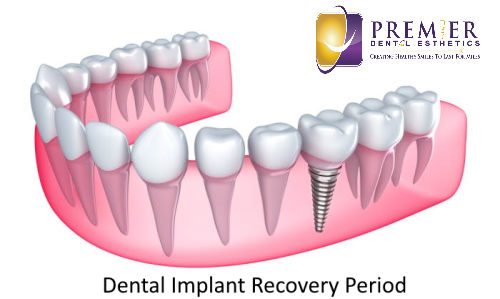
Typically, dental implant recovery takes three to six months. Implants are used to replace absent or damaged teeth. Your oral surgeon will make an incision to expose the gum and bone during the dental implant. The bone is then drilled with holes where the implant will be placed. Damaged teeth could necessitate tooth extractions. You must recover for seven to ten days before receiving dental implants.
What is the Typical Healing Period for a Dental Implant?
The average healing period for dental implants is between three and six months. At this point, the implants will have osseointegrated into the jawbone, and the gums will be completely mended, a procedure known as osseointegration. Each patient’s rehabilitation time will vary based on the number of implants they received, their adherence to post-operative instructions, and how their body reacts to the implant.
Understanding the Different Healing Stages After Dental Implant Surgery
Total recuperation time will vary based on the procedures a patient has undertaken. There are three primary phases of recuperation following dental implant placement.
- Stage 1: Post-Surgery Recovery Period
You will be advised to recover immediately following your dental implant surgery. This includes refraining from exercise, eating brittle or firm foods, and smoking. You may experience edema and discomfort close to the implanted tooth. Typically, this lasts a few days to a week. Obey your dentist’s instructions to recover quickly and safely.
- Stage 2: Healing of Soft Tissue
During the two-week initial healing phase following dental implant surgery, patients may experience erythema and edema around the implant site. Some patients may experience up to six weeks of edema. During this phase, it is essential to rest and avoid strenuous activities to ensure adequate soft tissue healing. Plenty of water can aid in implant site cleansing and speed up recuperation.
- Stage 3: Osseointegration
During osseointegration, the dental implant integrates with the mandible, creating a solid foundation for the abutment and replacement tooth. This phase can last anywhere from three to six months, depending on age, oral health, and the number of implants. As your recovery progresses, you can progressively resume some of your regular activities. You must brush your teeth gingerly while avoiding the implant site until it completely recovers.
Before undergoing implant surgery, it is crucial to understand what to expect during the different dental implant healing stages. By following your dentist’s instructions, you can ensure the success of your implant surgery.
How Long Does It Take for the Bone Graft to Heal After a Dental Implant?
The dental bone transfer procedure increases the jawbone’s volume and density in areas of bone loss. Commonly performed before the implantation of dental implants or when adjacent teeth have experienced bone loss. Although you may begin to feel normal within a week or two, full recovery from dental bone graft surgery can take three to nine months. The recovery length depends on the graft type, the location where it was implanted, and your body’s capacity to recuperate.
What Is the Healing Time for a Dental Implant Before a Crown Can Be Placed?
On average, the implant site must heal for three to six months before a crown can be attached. A dental implant crown is an artificial tooth affixed to a dental implant, providing it with the same durability and strength as a natural tooth. Osseointegration must occur before crown implantation to provide sufficient stability for a crown.
What is Osseointegration?
Osseointegration is the process by which the implant and jawbone fuse due to the growth of the adjacent bone. While recuperating from the initial implant surgery takes only two weeks, osseointegration takes three to six months. After osseointegration, the dental implant will successfully fuse with the tissues and jawbone. The tissues of the jaw will grow around the implant, increasing its strength and stability. Osseointegration is required for the successful placement of dental implants.
What affects dental implant healing time?
Here are the six common factors that affect dental implant healing time.
- Healthy Gums – The health of your gingival tissue is a significant factor that influences dental implants’ success rate and recuperation time. Active periodontitis increases the likelihood of developing peri-implantitis, an infection associated with implant failure. The majority of implant dentists recommend treating periodontal disease before implant placement.
- Dental Hygiene – When it comes to dental implant recuperation time, maintaining excellent oral hygiene is crucial. Plaque and microorganisms in the mouth can be controlled by brushing twice daily, flossing once daily, and using mouthwash. This reduces the risk of infection and increases the likelihood of successful dental implant placement.
- Jawbone Density – The density of the mandible is a crucial factor influencing the success of dental implants and their recuperation time. This is because sufficient jawbone mass is required for the implant to osseointegrate. People with less mandible mass can still receive dental implants, though they may require additional procedures such as bone grafting.
- Diet – Diet is another prevalent factor affecting dental implant recuperation time. After surgery, you must adhere to a temporary soft food diet. Consuming soft foods helps you avoid damaging your dental implant before it has had time to recover. Conversely, consuming chewy, crunchy, or firm foods may overstress a recuperating implant, causing it to shift or shatter.
- Smoking – If you smoke, your oral and overall health will suffer. After dental implant surgery, smoking interferes with the body’s normal recovery process and increases the risk of infection. Additionally, smoking constricts blood vessels, increasing the risk of excessive hemorrhaging before and after surgery.
- Proper Hydration – Water consumption is essential after dental implant implantation. It aids in the elimination of impurities that could otherwise impede recuperation. Additionally, caffeine and alcohol should be avoided because they dehydrate the body. Alcohol should be avoided for at least two weeks after surgery, if not longer, because it may also hinder recovery.
Dental Implant Recovery Tips
To reduce the edema, you should keep your head elevated, refrain from strenuous activity, apply an ice compress, and take the anti-inflammatory medication prescribed by your dentist. Rinse your mouth with tepid salt water to promote quicker healing. Soft foods should be consumed for the first few days following the dental implant implantation. Regular oral hygiene reduces the likelihood of acquiring an infection by removing plaque and bacteria. Finally, you must refrain from smoking because it delays the body’s recuperating process.
How Long Can You Wait to Get a Dental Implant After a Bone Graft?
Six months is the utmost duration between a bone graft and a dental implant. This period is required for the bone transplant to become strong enough to sustain a dental implant. In areas where bone loss has occurred, a bone implant can help augment the volume and density of the mandible. After the site of the bone transplantation has fully recovered, the dental implant can be inserted.
What more is there to know about dental implants besides healing time?
Dental implants are a popular dental treatment option that involves replacing missing or damaged teeth with artificial teeth that are securely anchored into the jawbone through implant placement. Dental implants can provide a long-lasting solution for missing teeth and can greatly improve the function and appearance of your smile. The dental implant cost with insurance can vary depending on various factors such as the number of implants required, the complexity of the procedure, and your location. It’s best to discuss the costs with your dentist beforehand and explore any potential insurance coverage or financing options.
Dr. Peter S. Young at Premier Dental Esthetics has been practicing dental implant surgery for over 25 years since 1998. With expertise in this field, Dr. Peter S. Young will provide you with post-operative care instructions to ensure your complete recovery from dental implants.
Have a question about your smile?
Dr. Peter S. Young and Dr. Clifford S. Young are happy to help. Schedule a visit or give us a call.

Patient reviews
What our patients say
“Dr. Peter Young is an amazing dentist with his patient's well being at the forefront. He's very knowledgable in the dental field and is always on the lookout of how he can continue to improve the lives of his patients. The facility is beautiful and immediately alleviated my fears of the dentist. The staff is the icing on top of the cake.”
“Oh my goodness! I've stumbled upon the most amazing dental practice! After enduring a string of disappointing experiences with other dentists that nearly made me give up, I discovered this gem. The waiting room is stunning, boasting breathtaking views. Dr. Young possesses the patience of a saint—so genuinely nice and caring!”
“I contacted the office today after a 5-year gap in seeing Dr. Young due to relocation. Patty, who answered the phone, recognized me when I mentioned my name. She verified with my insurance and later informed me of the outcome. Their service remains excellent as ever.”
Common questions
Frequently asked questions
Can’t find your answer? Ask our virtual assistant in the corner, or call our front desk.
What are dental implants?
A dental implant is a small post placed in the jawbone that replaces the root of a missing tooth and supports a crown, bridge or denture that looks, feels and functions like a natural tooth.
What implant treatments do you offer?
Single and multiple tooth implants, All-on-X full-arch implants, ceramic implants, guided implant surgery, bone and sinus grafting, and platelet rich fibrin (PRF) to support healing.
How much does an implant consultation cost?
Premier Dental Esthetics offers an implant consultation with a 3D CT scan for $159 (see the Special Offers page for current terms).
What technology is used for implant placement?
The office uses a 3D cone beam CT scanner and guided implant surgery to plan implant position precisely before treatment.
Do you accept dental insurance?
Yes. The practice accepts PPO dental insurance, including Delta Dental PPO and Cigna Dental PPO, and the team will verify your benefits and help you maximize your coverage.
Is Premier Dental Esthetics accepting new patients?
Yes. Premier Dental Esthetics in Arcadia, CA welcomes new patients for general, cosmetic, implant, restorative and emergency dentistry. Call (626) 445-2536 or request an appointment online.
Your new smile starts here
Ready to create the smile of your dreams?
New patients and emergencies welcome. Same-day appointments, early-morning and evening hours.